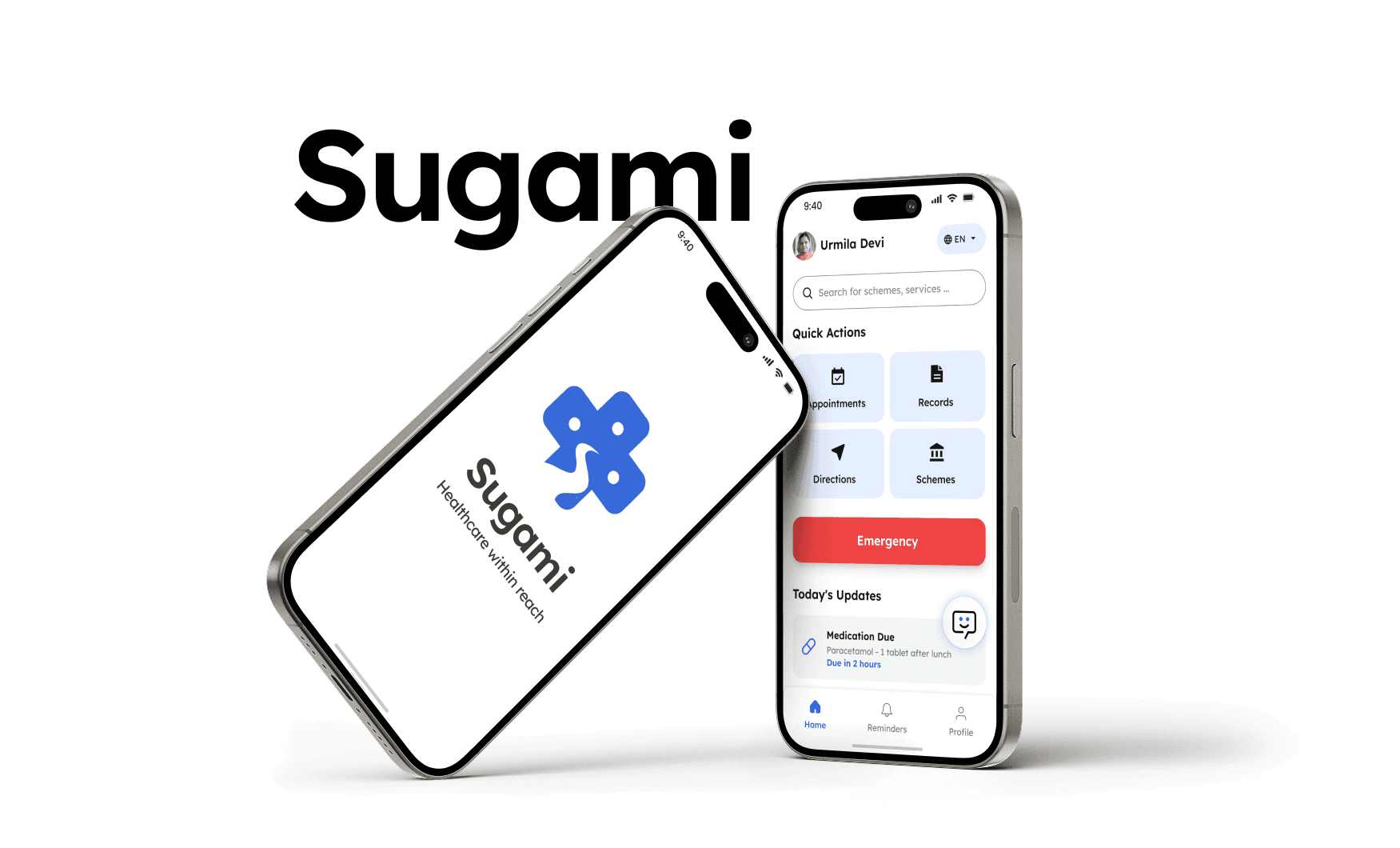
Client:
self-initiated-project
Tools Used:
Figma, Illustrator, Photoshop
Bridging Healthcare Gaps in Rural India
Introduction
This is a case study about my UX project focused on solving real healthcare problems in the rural villages of Ghazipur, Uttar Pradesh. This journey led to the design of Swasible — a healthcare companion app made for villagers with low digital literacy and limited healthcare access.
In the villages of Ghazipur, Uttar Pradesh, something as basic as getting medical help can feel out of reach.
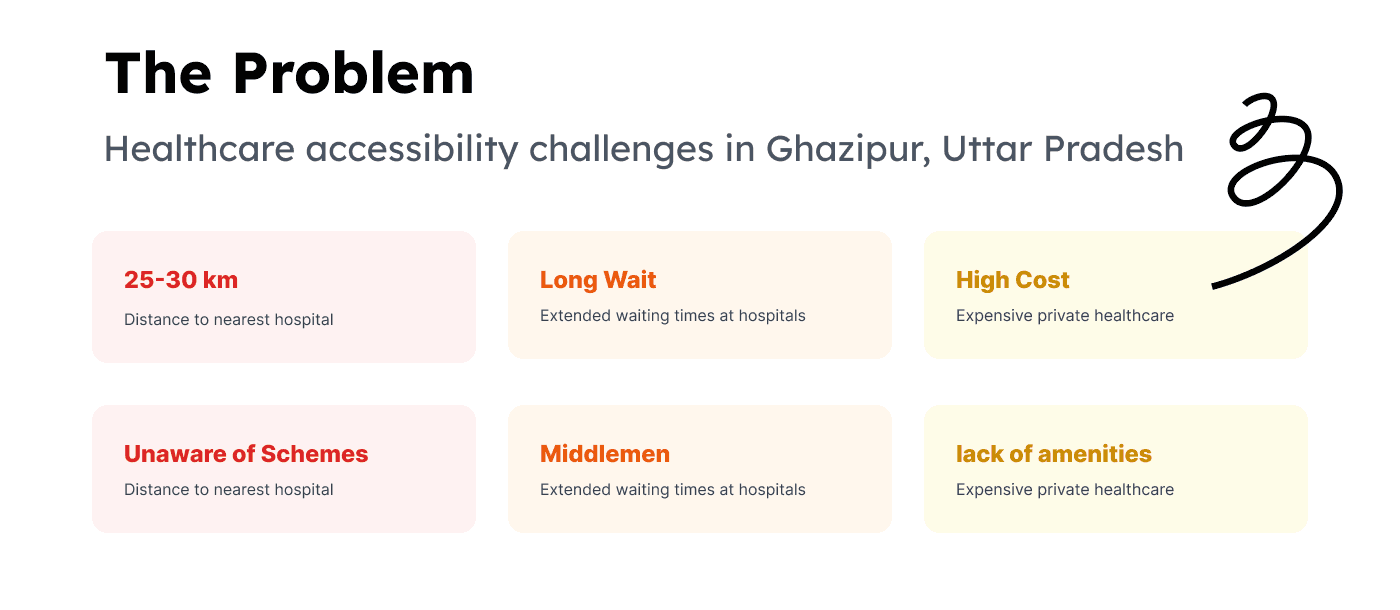
I saw not just alack of infrastructure, but a deeper gap — in awareness, access, and trust.
That became the foundation for Sugami.
Goal
To design a healthcare app that empowers rural people to:
Handle emergencies quickly and reduce waiting time in hospital
Understand their treatment plans and keep records of treatments
Navigate in hospitals easily
Learn about govt. health schemes and avail benefits
Aware of medicine intake and routine checkup
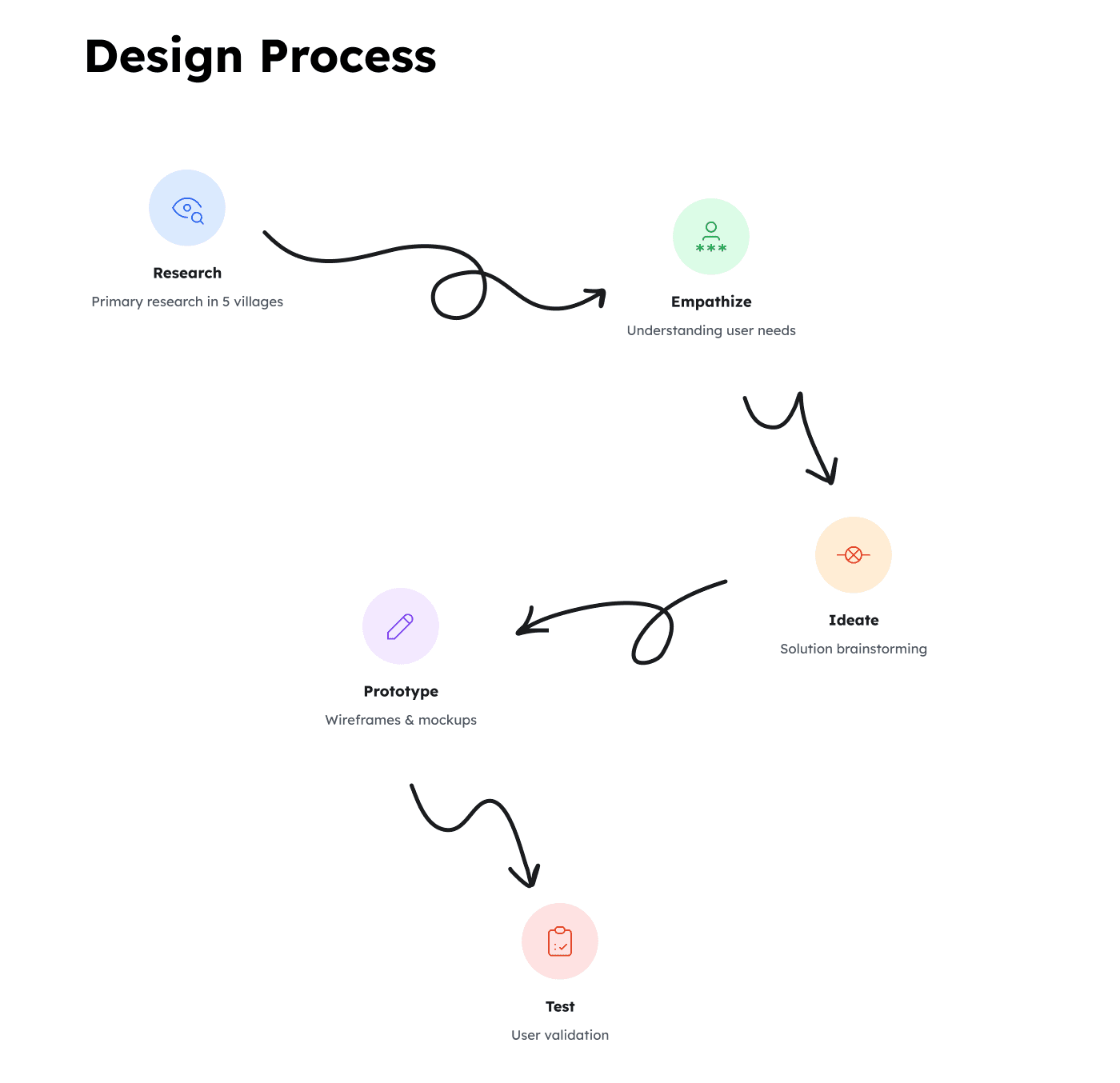
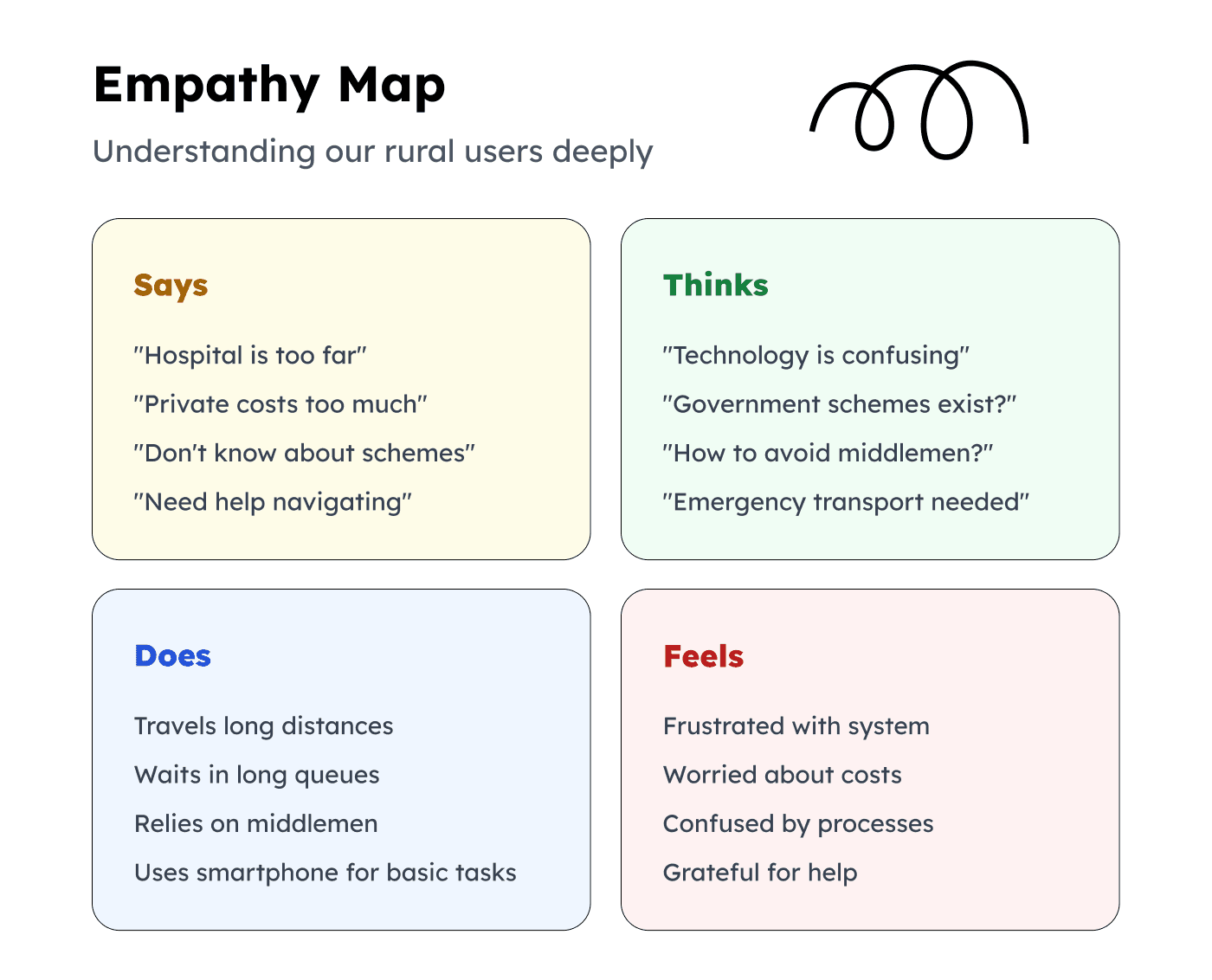
Engaged with villagers, ASHA workers, and local doctors to understand emotional and practical healthcare hurdles
Identified recurring pain-points:
Emotional stress during emergencies
Dependence on others for interpreting medical instructions
No system to track past records, medicine intake or follow-up visits
Anxiety and lack of trust due to inaccessibility of official schemes
Research
Primary Research:
In-person interviews in 5 villages
Age group: 35–70+
Observed hospitals and transportation system
Secondary Research:
Govt. scheme documents (Ayushman Bharat, AABY)
Rural app usage behavior
User Persona
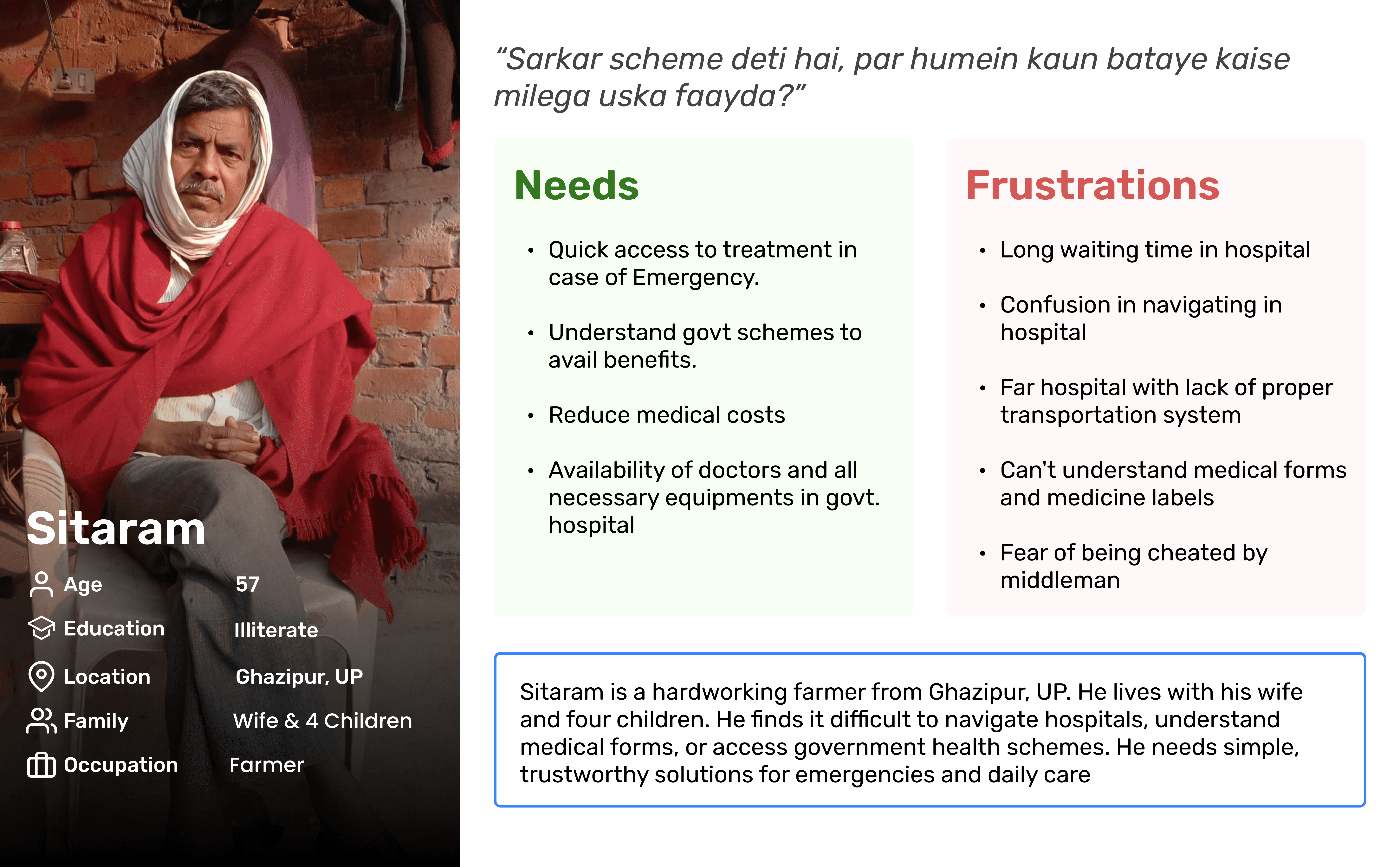
Designing With Compassion
I followed a human-centered design approach — listen first, design second.
Once I mapped real pain points and emotional triggers, I began to explore simple, intuitive design solutions.
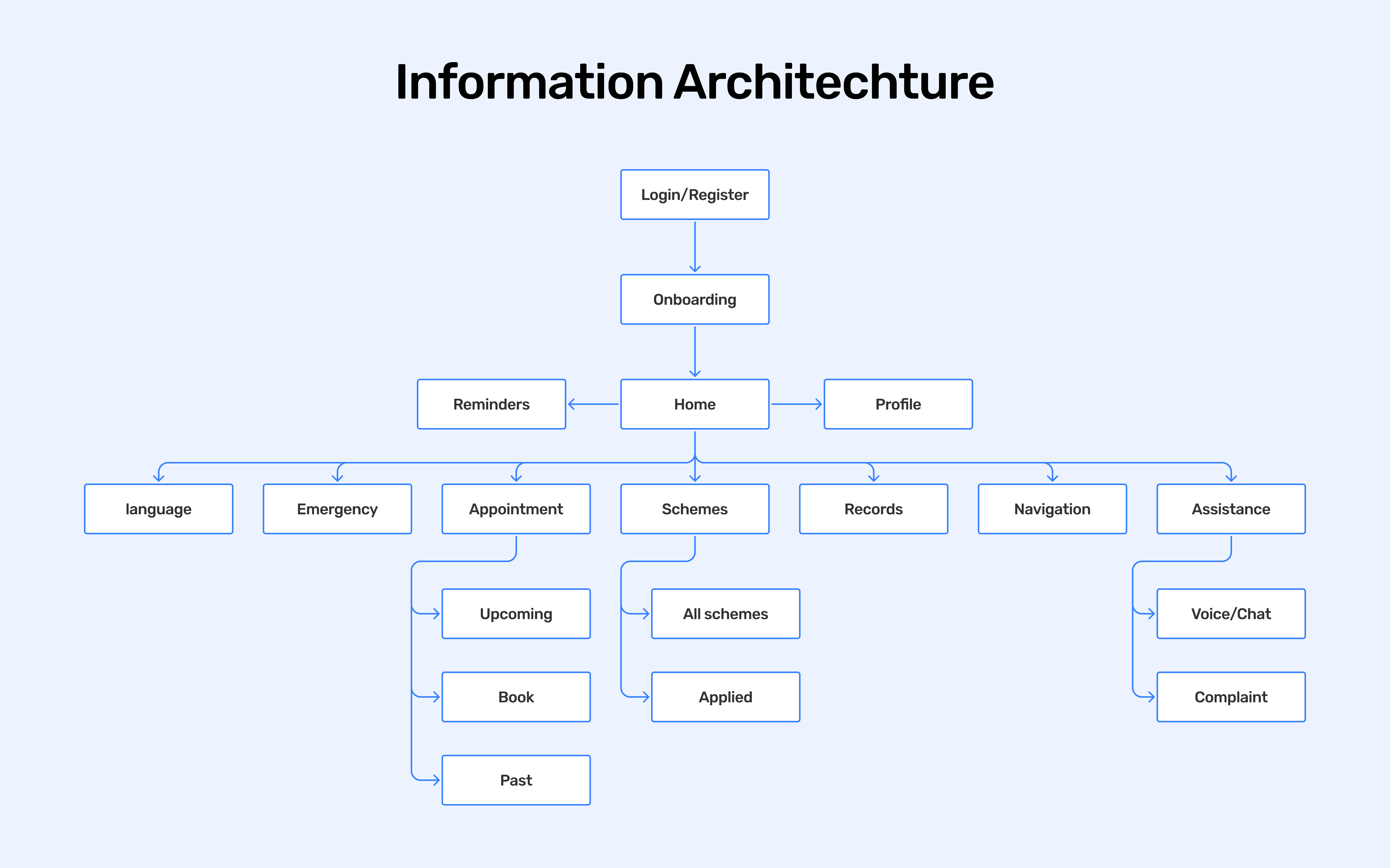
Medical Records: Scan and store prescriptions with photo tags — no typing needed
Health Schemes: A simple explainer of govt. schemes — see eligible schemes, one click apply and track
Medicine Reminders: Visual reminders using icons, colors, photos and voice
Emergency Help: A one-tap SOS feature to call for help, first aid guides, video assistance
Appointments: pre book appointments to reduce waiting times
Hospital Navigation: Hospital map and visual guide to navigate inside hospital (OPD, labs, pharmacy)
Family Mode: Let younger family members help manage the app for elders
High-Fidelity Screens
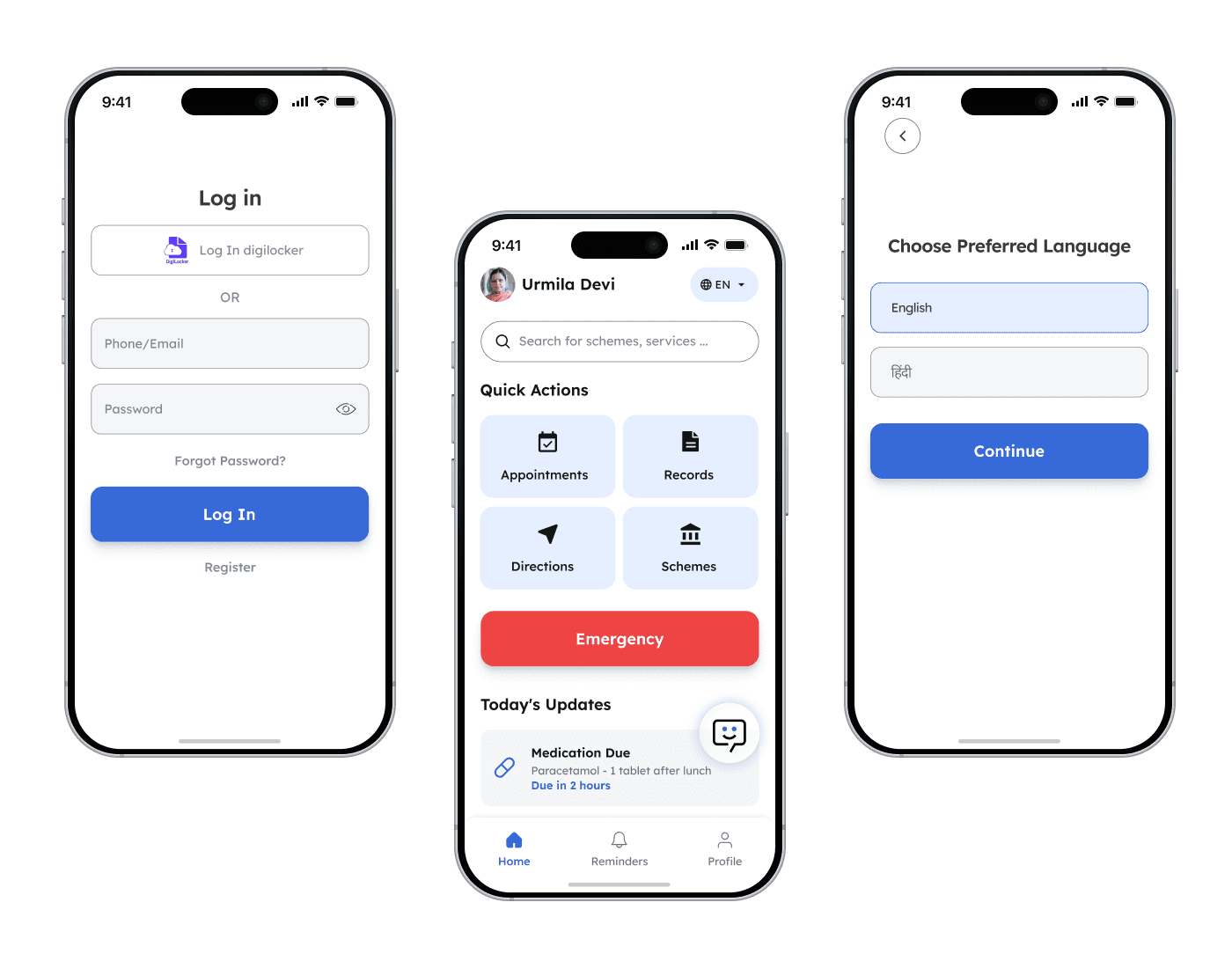
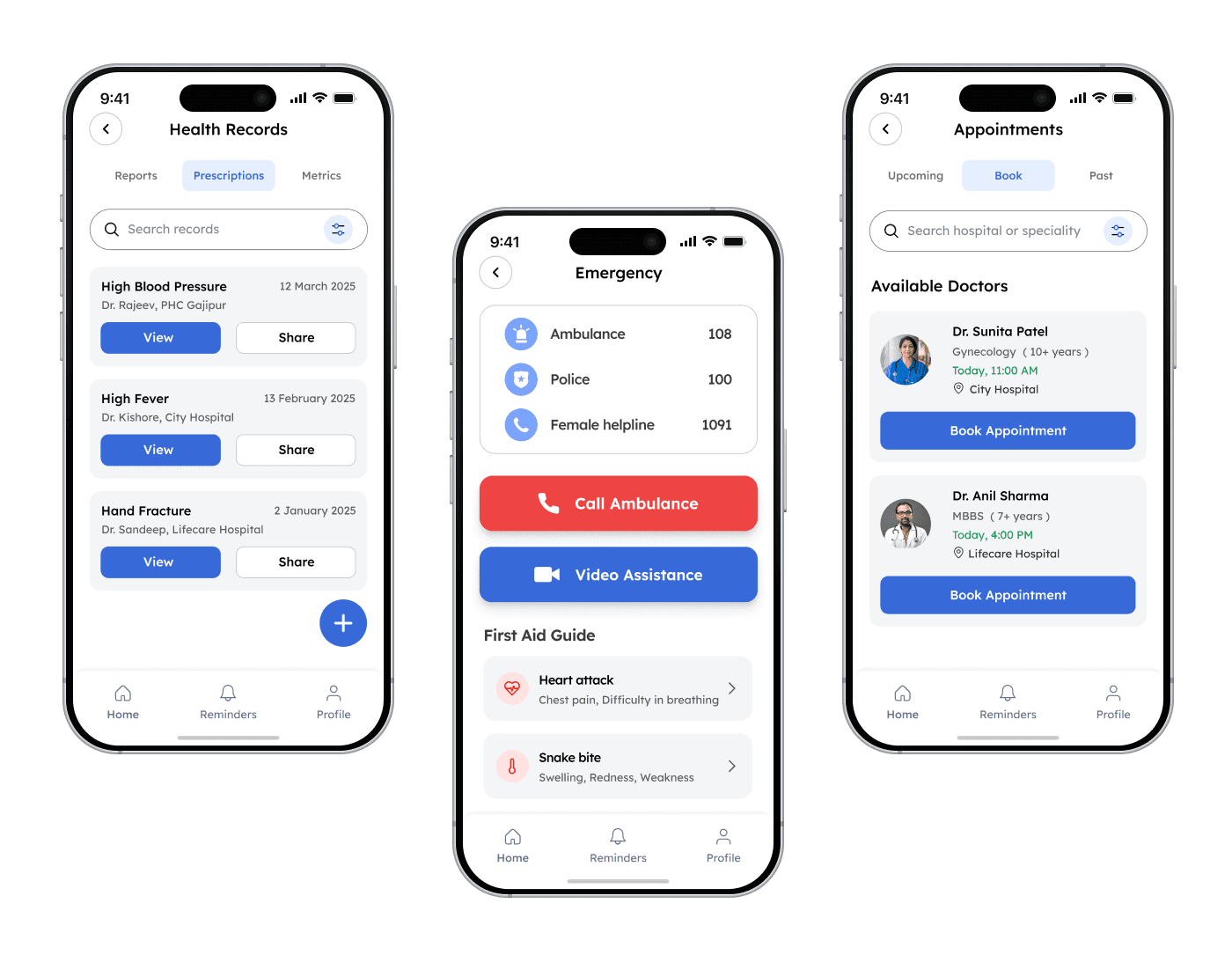
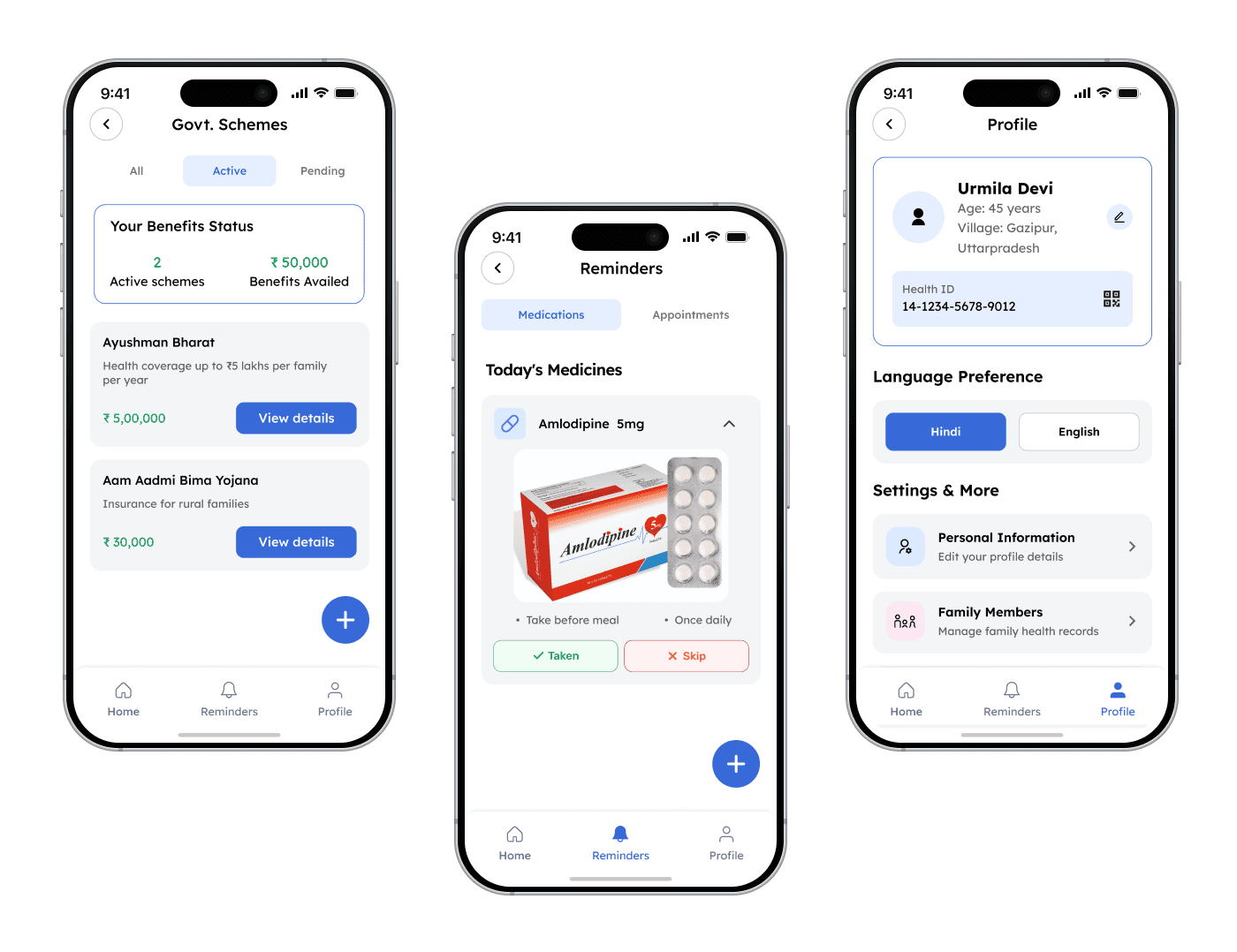
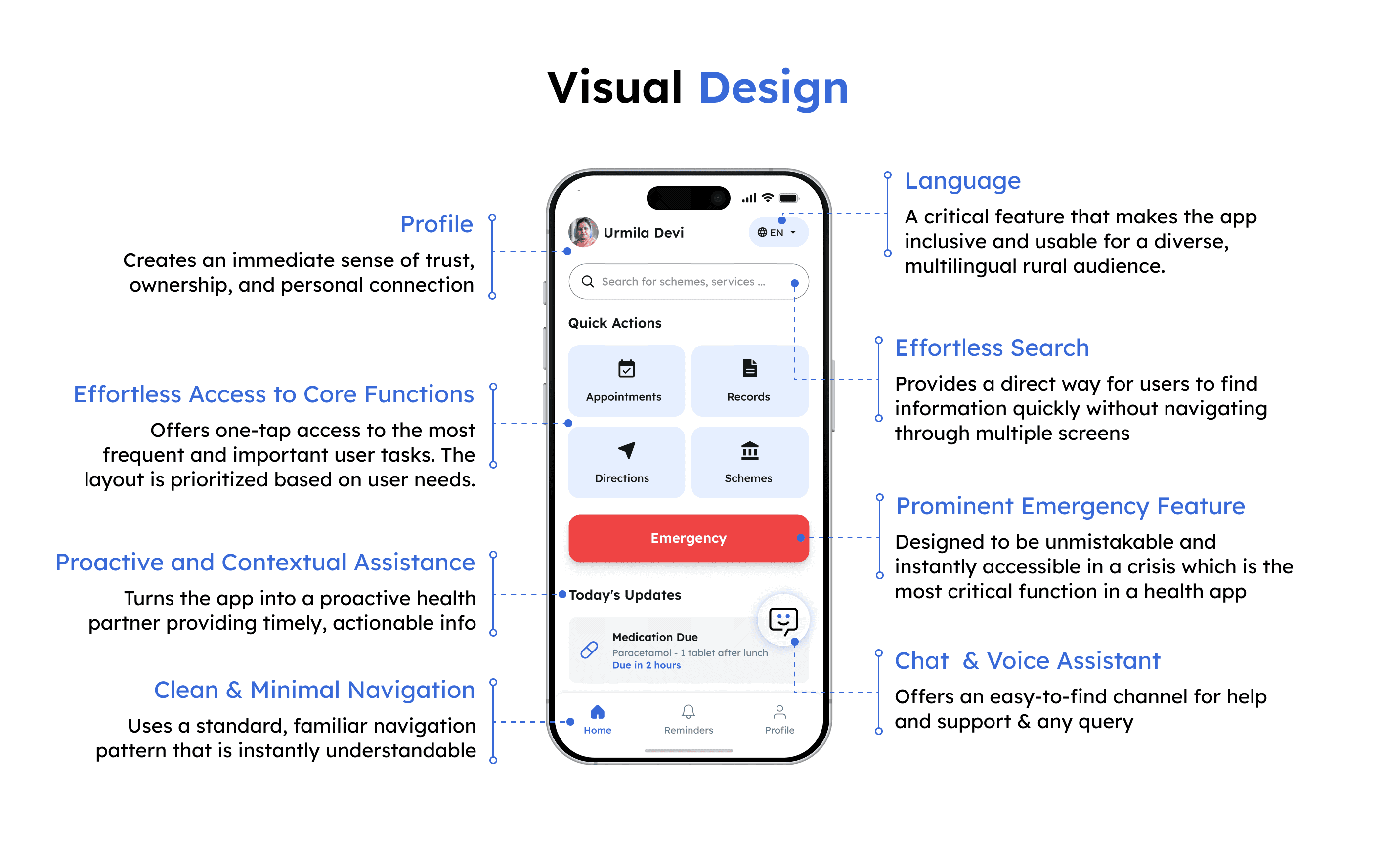
What Made Sugami Different
Designing for low digital literacy meant more than simplifying the interface — it meant building trust.
I focused on:
Visual storytelling instead of text
Voice support in local dialect
Friendly colors, soft edges, and clear call-to-actions
Offline usability — so it works even without the internet
The Outcome
Though still in prototype stage, Sugami helped spark conversations with Hospitals, NGOs and local healthcare workers who showed interest in taking it forward.
Reflection
This project reminded me that design is about people, not pixels.
Sometimes, the most meaningful innovations are not the ones that use the latest tech — but the ones that show up for those who’ve been left out of it.
Made with care for the people